Àjo
BRAND STRATEGY, IDENTITY, EXPRESSION
Role
Brand Strategist
Type
Brand Intelligence Engagement, Insurtech
Year
2026
Àjo's founder came to me with a clear problem and a less clear brief. Nigeria had an insurance crisis — not a visibility crisis, not a product crisis, a belonging crisis. The products existed. The 99% of Nigerians without cover had made a decision, for very rational reasons, that those products weren't for them.
The question wasn't how to make insurance look better. It was how to make it feel like it was already theirs.
01- Discovery
Every engagement I take on starts with a single question: What does your audience already know that you don't?
With Àjo, I needed to understand three things before I named, positioned, or built anything: how Nigerians actually think about insurance — not the survey answer, but the underlying logic that keeps 99% of the population uninsured. Who, specifically, was being left out? And what informal systems already existed — and what trust they were already carrying.
The third question turned out to be the one that changed everything.
02- Research
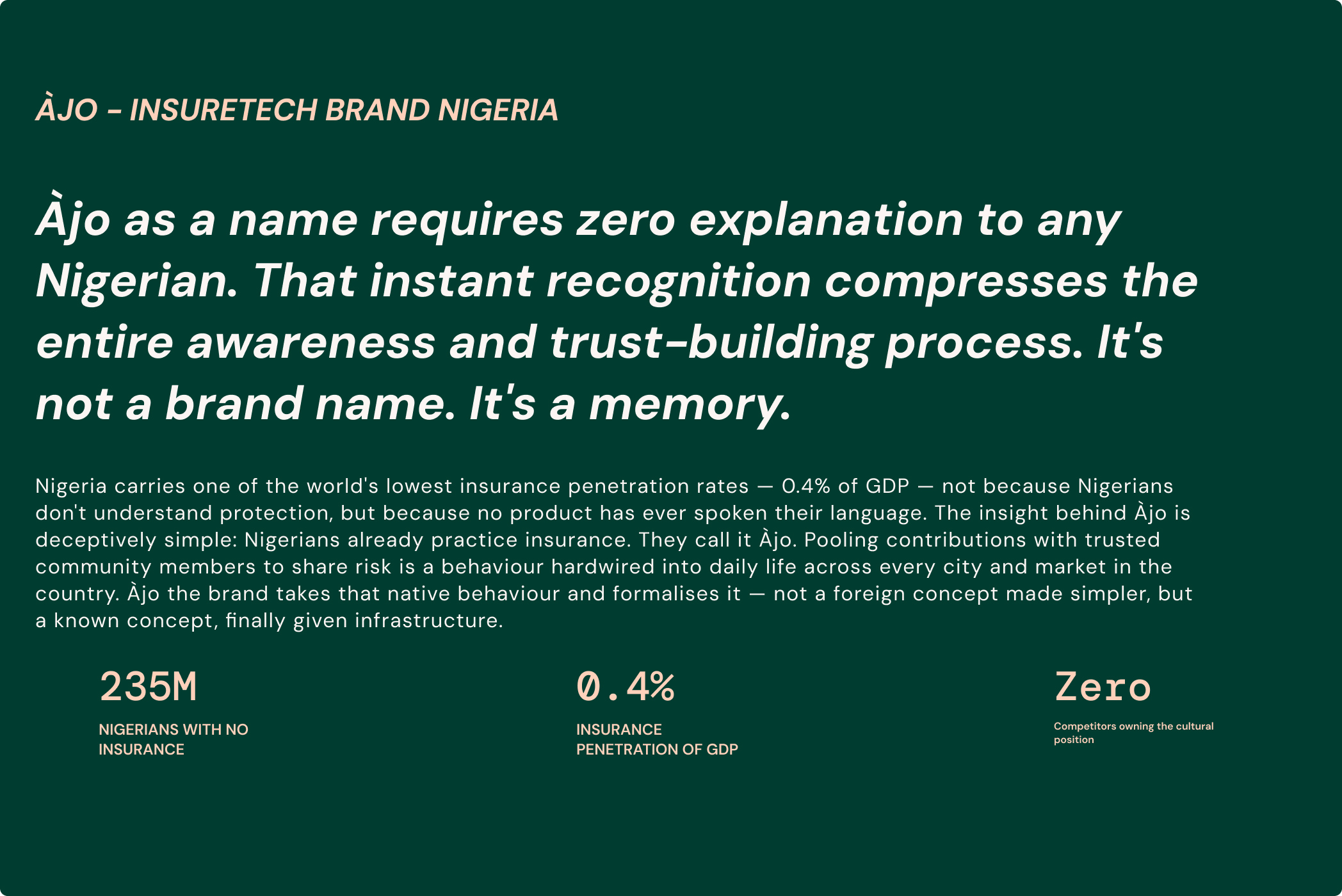
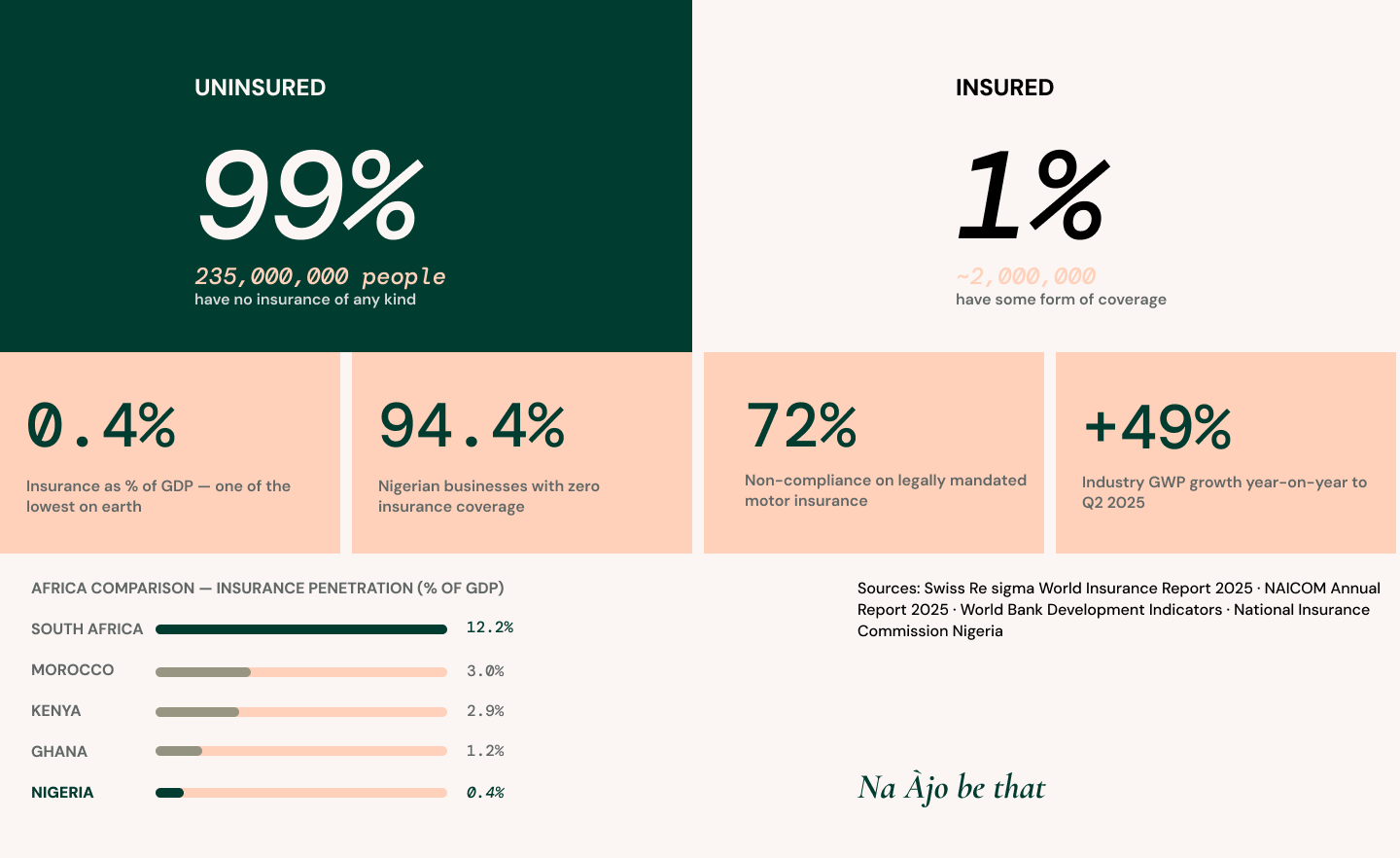
On the insurance gap: 1% of Nigerians hold formal insurance. The 99% who don't are uninformed — they are unconvinced. In research, the word "insurance" triggered the same associations every time: inaccessibility, bureaucracy, products built for people with different lives. The gap was not awareness. It was relevant.
On informal financial behaviour: Nigeria already has a thriving system of informal protection — ajo, esusu, adashe — rotating savings groups where communities pool money, absorb each other's risk, and build trust through proximity and repetition. These systems work not because they are efficient but because they are relational. The person holding your money is someone you see every week.
This was the finding that reframed the entire project. The trust wasn't missing from the category. It was sitting, fully formed, in a word that everyone already knew.
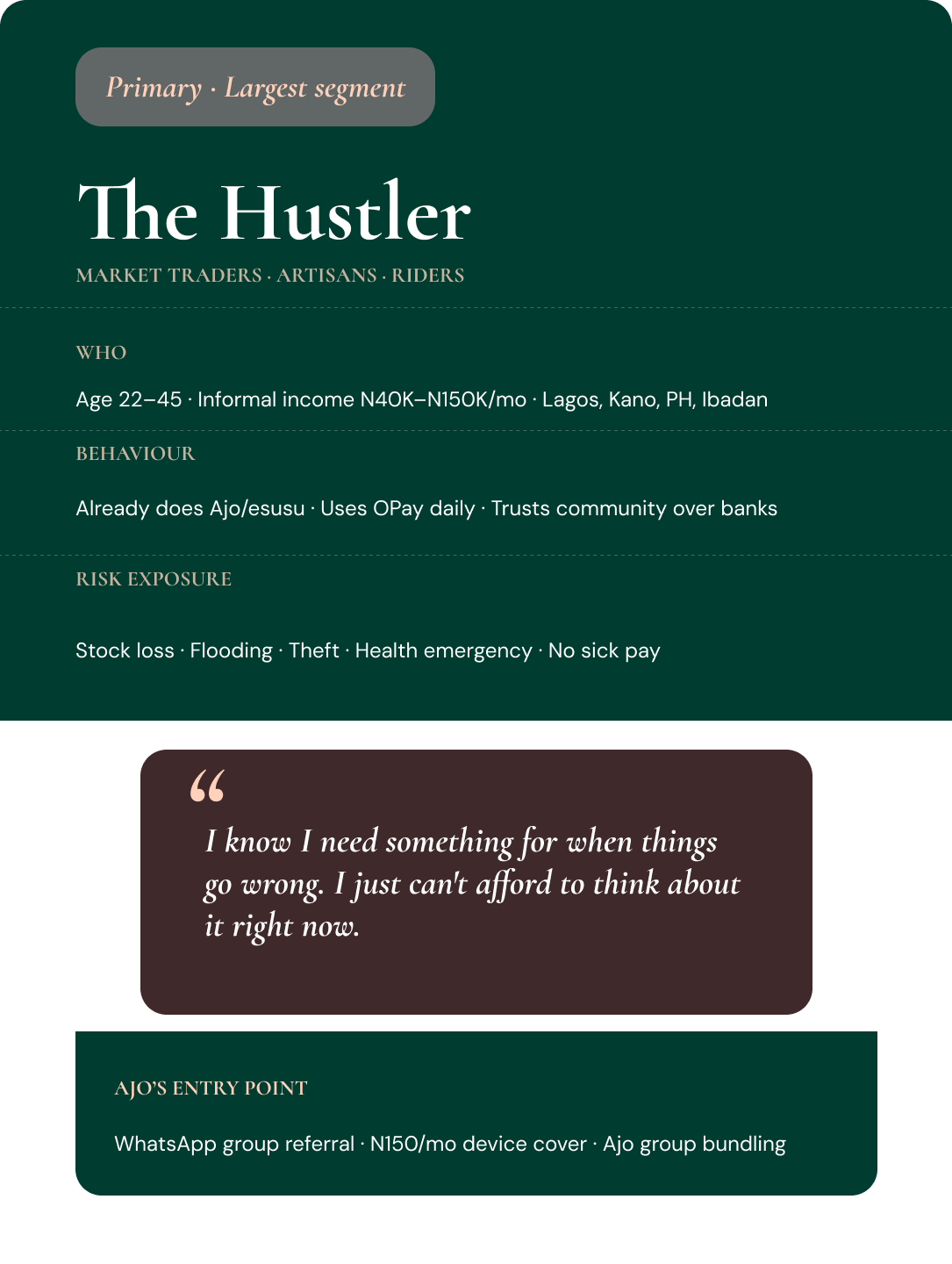
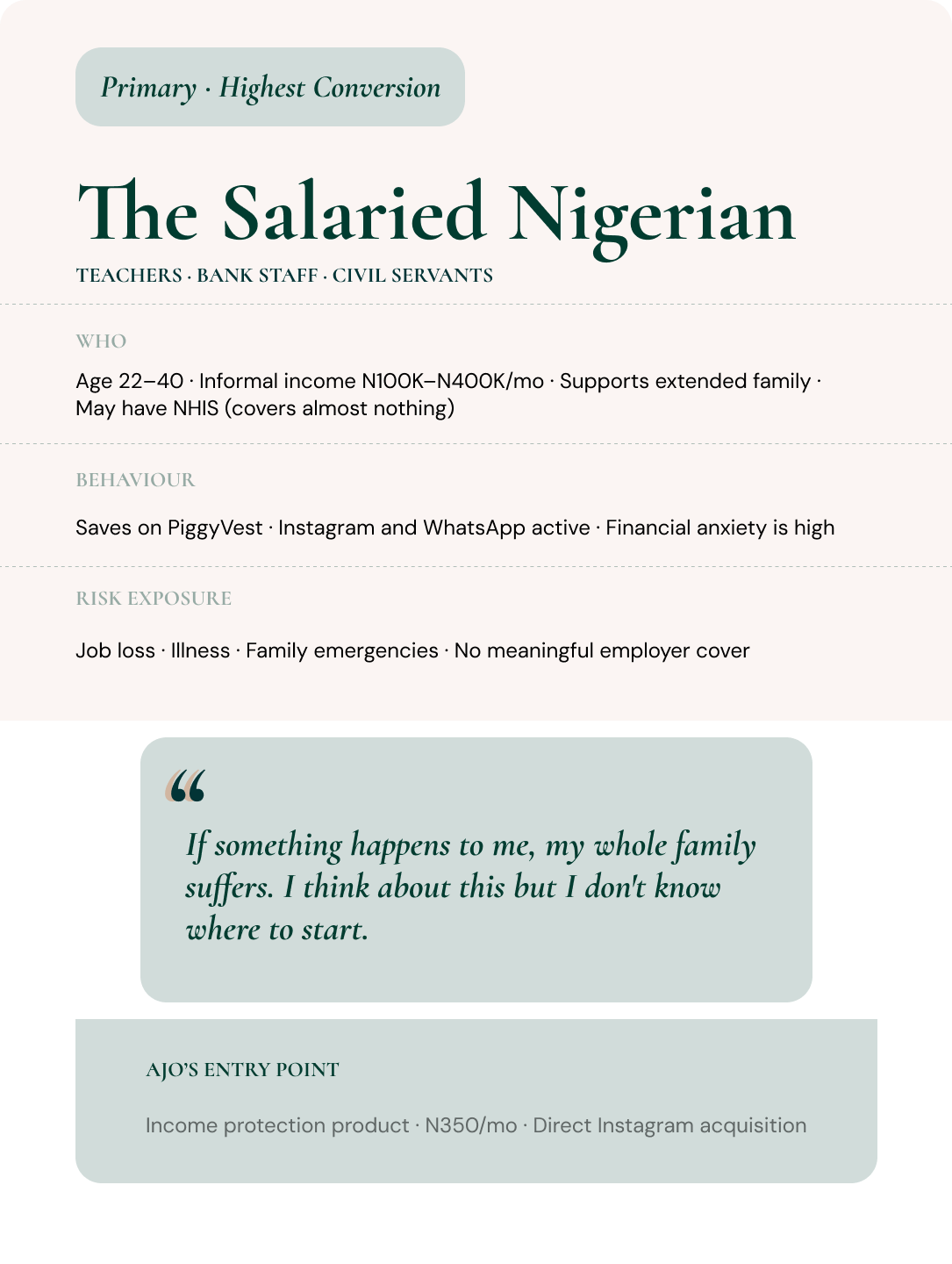
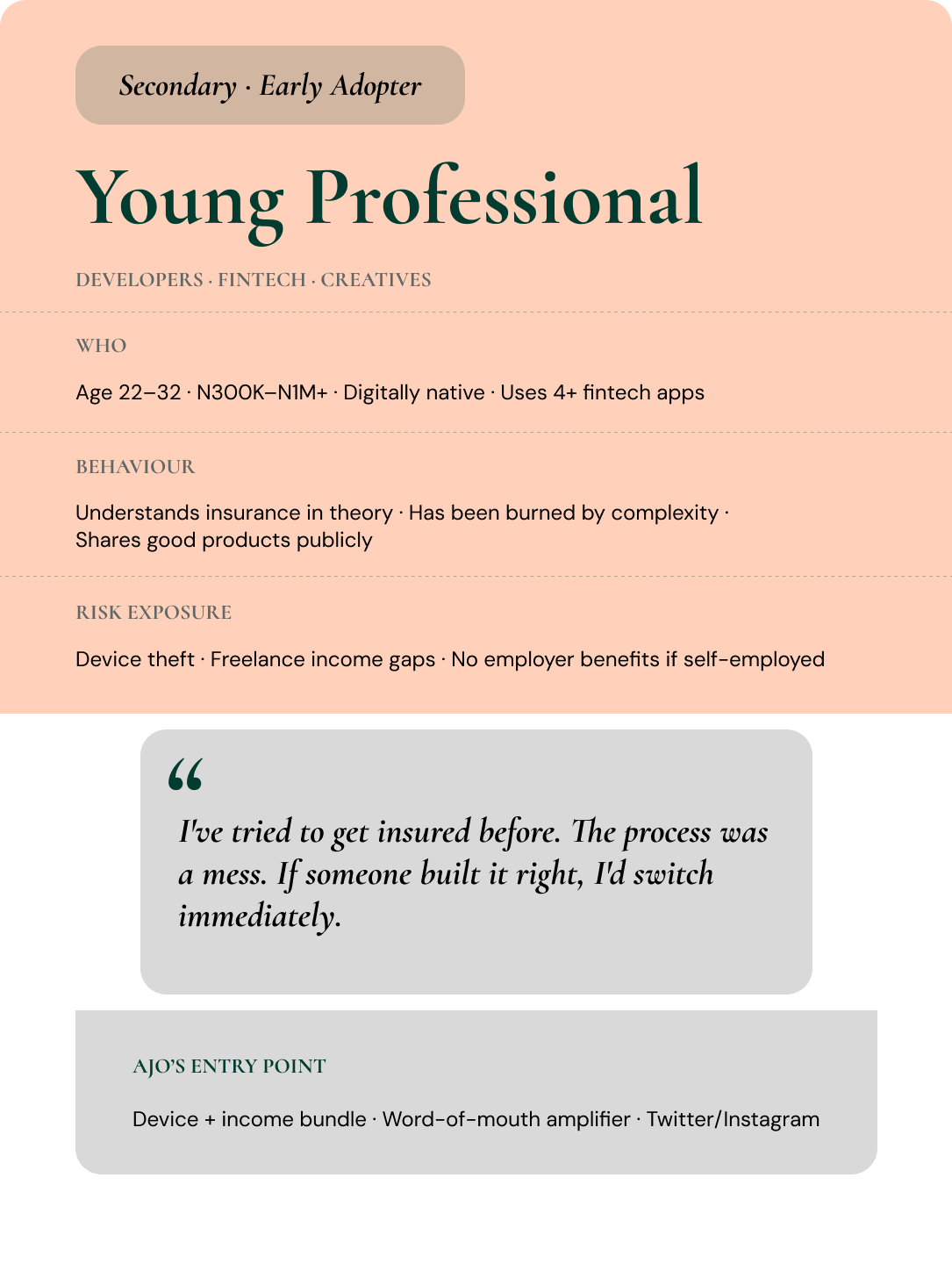
WHO THE BRAND HAD TO REACH
"Your cover starts today. Simple as that."
03- Synthesis
Three findings shaped every decision that followed.
The trust already existed — just not in insurance.
Nigerians weren't distrustful of protection. They were distrustful of institutions. Informal savings systems proved that when protection is communal, proximate, and earned over time, participation happens at scale. The task wasn't to build trust from nothing. It was to find the right container for the trust that already existed.
Complexity was doing more damage than pricing.
Every point of friction in the research traced back to the same source: the category was too complicated to evaluate, too opaque to trust, too disconnected from the actual moment of need. Reducing complexity wasn't aesthetic — it was a strategic necessity at every layer: naming, product architecture, campaign language.
Community is the distribution model.
Ajo groups already exist as networks. The person who joins brings their circle. The brand didn't need to reach every individual — it needed to fit inside the relationships people already had.
04- Strategy
Positioning: Àjo is not an insurance app. It is the formalisation of what Nigerians already do. It takes the logic of Àjo — community, trust, and pooled protection — and gives it a structure that scales. Not aspirational. Directional. Every decision in the brand traces back to it.
"For everyday Nigerians shut out of formal protection, among a market of complex, culturally foreign products, Àjo is the community-first micro-insurance platform that makes coverage feel like something you already understand — because it's built on a practice you've always trusted."
Community First
Protection is a shared commitment, not an individual transaction. Every product decision reflects the mutual trust that makes an Àjo group work.
Radical Clarity
Insurance complexity has been a tax on the people who understand it least. Àjo dismantles that — plain language, transparent pricing, no hidden clauses.
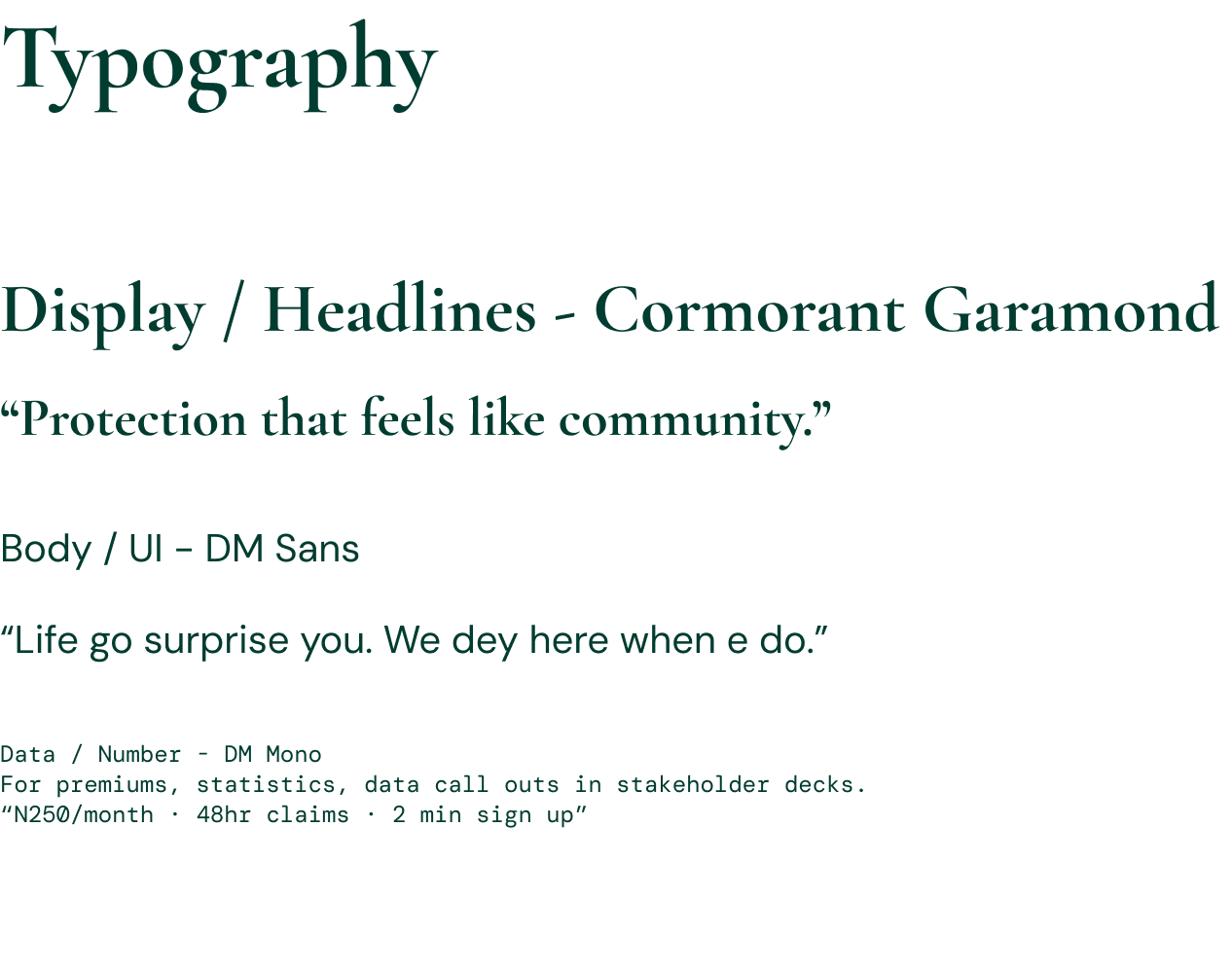
VOICE & TONE - WARM, GROUNDED, DIRECT, CLEAR, COMMUNITY ROOTED
SOUNDS LIKE
PRIMARY LOGO
COLOUR PALETTE

CAMPAIGN
Rooted Pride
Àjo doesn't borrow the language of Western finance. The culture isn't a marketing angle — it's the product logic itself.
"If anything happens to your phone, we've got you. No long story."
"You've been putting in. Time to take out."
COMMUNITY LOGO
NOT LIKE
"Your policy has been successfully activated per our terms."
"In the event of a covered loss, subject to policy conditions…"
"Please initiate your claim via the designated portal."
05- Identity
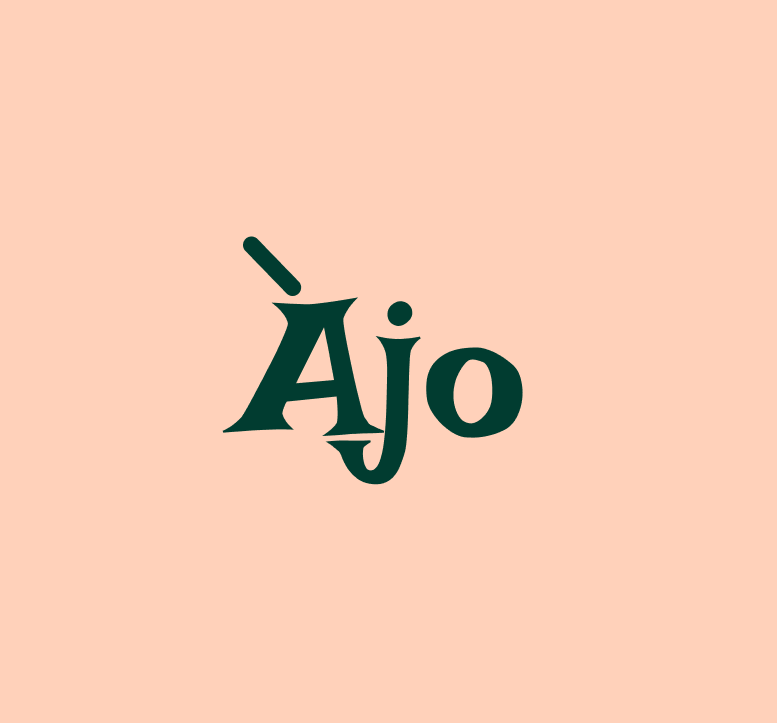
Naming: Àjo — the word itself — already existed in every Nigerian household as a practice. It carried familiarity, community, and an implicit understanding of how money and trust work together. It needed no explanation. It needed only recognition.
The accent mark stays. Àjo, not Ajo. The grave accent on the À is Yoruba orthography — removing it would strip the word of its origin.
What I decided not to build: The temptation in product design is to name every feature separately — Àjo Shield, Àjo Plus, Àjo Protect. I rejected it entirely. One brand carries the weight. Coverage is Àjo Covers. Claims is Àjo Claims. The naming system is the simplicity strategy made visible.
SECONDARY LOGO
LOGO REVERSED
PATTERN
06- Expressions
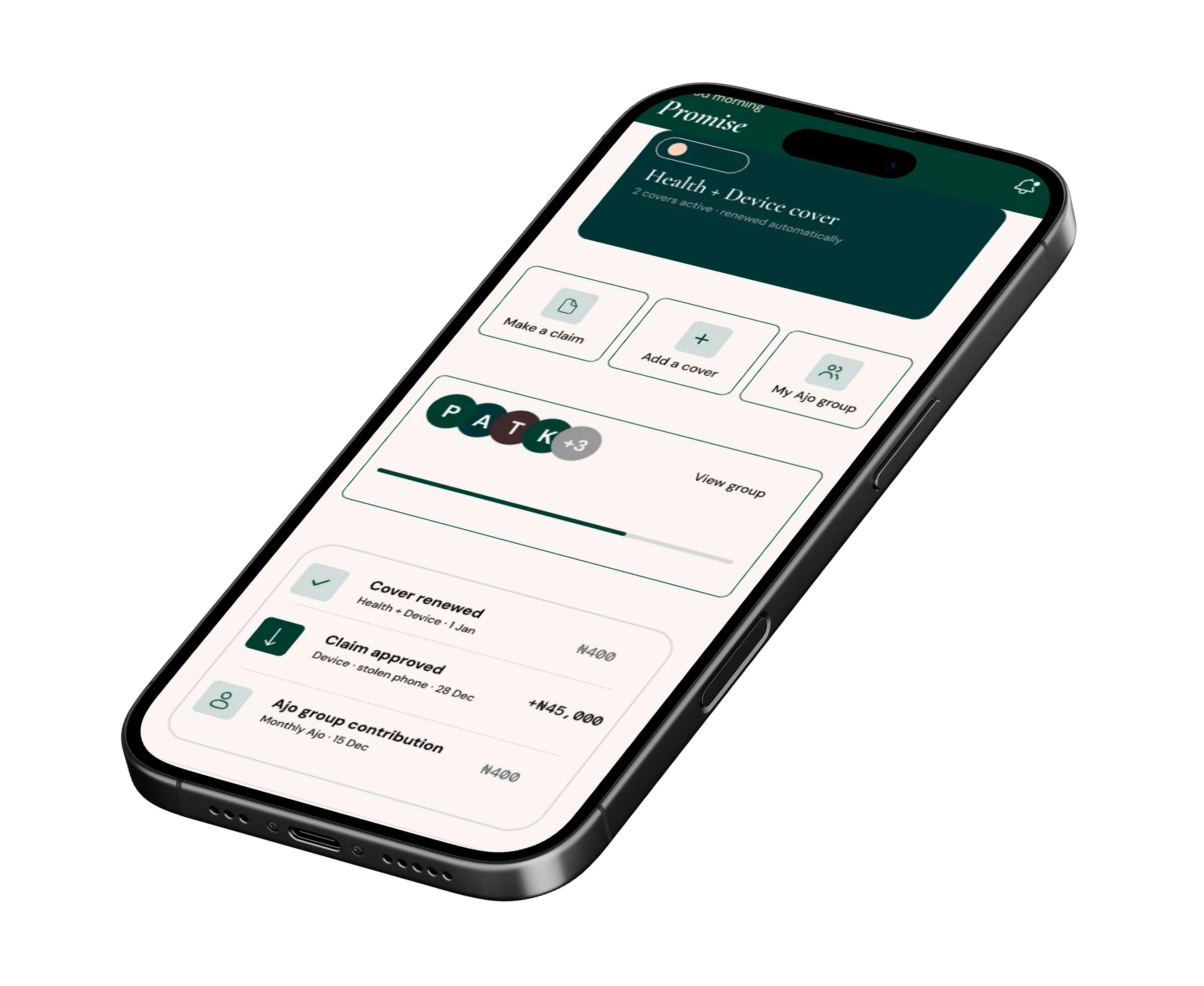
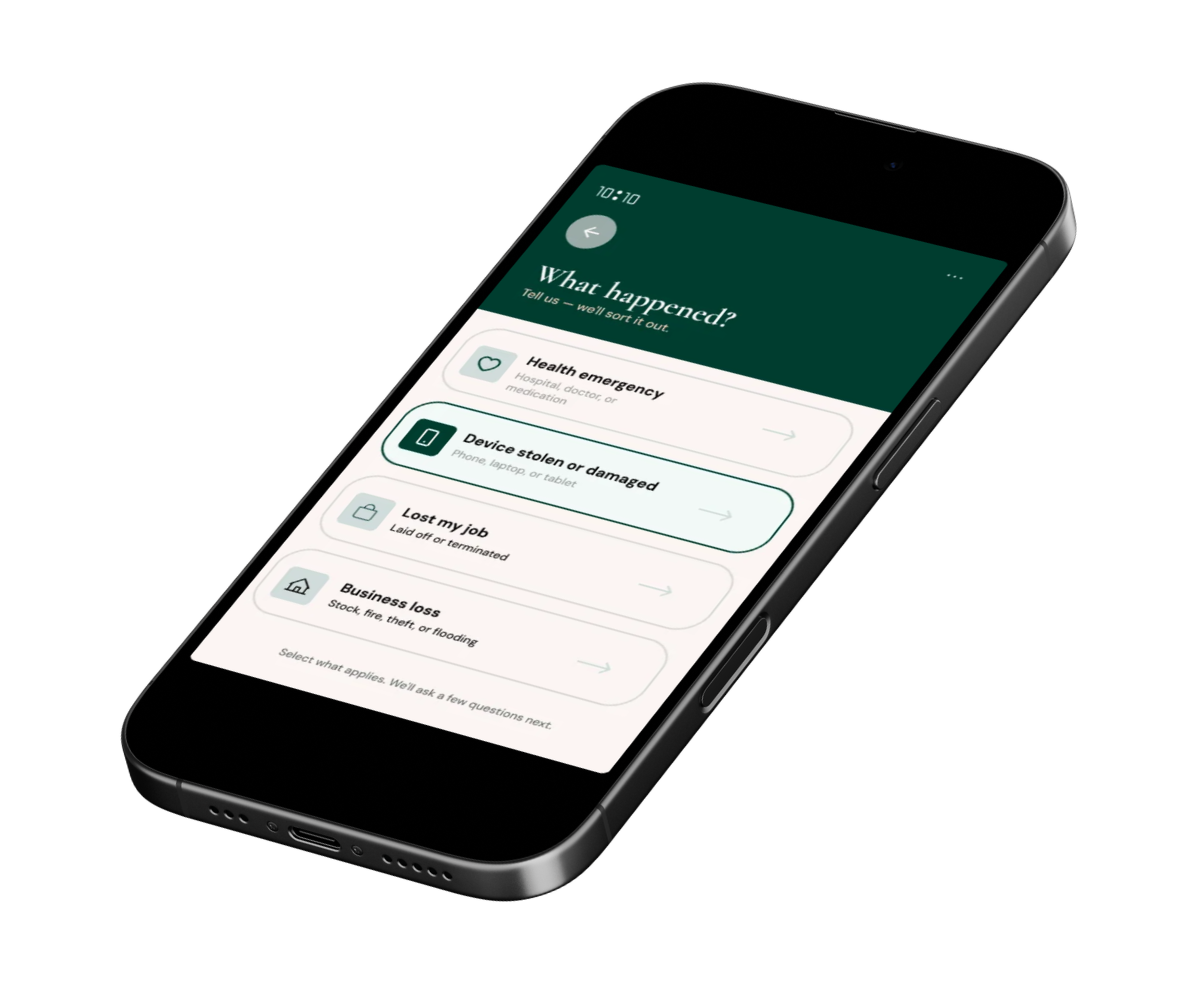
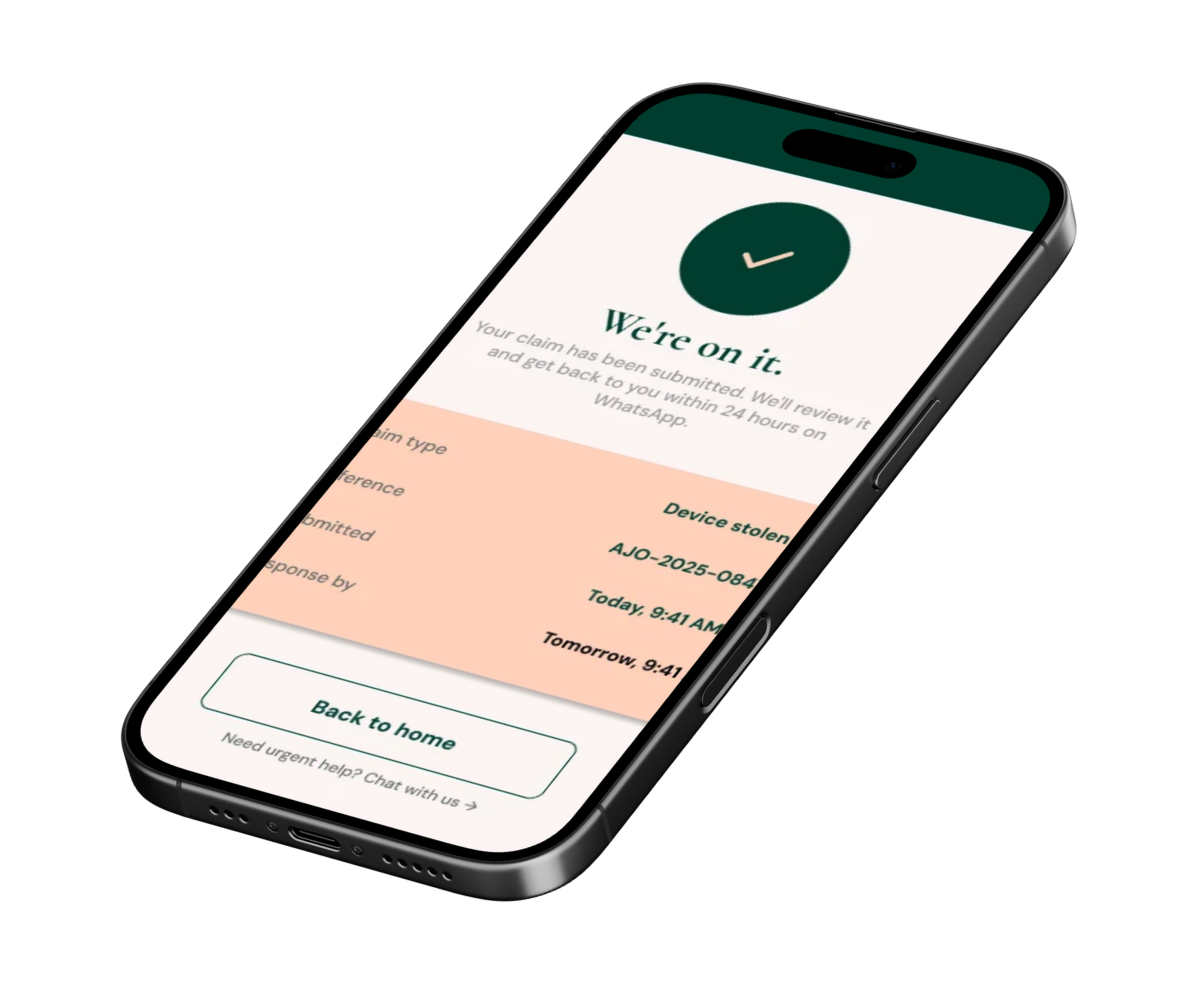
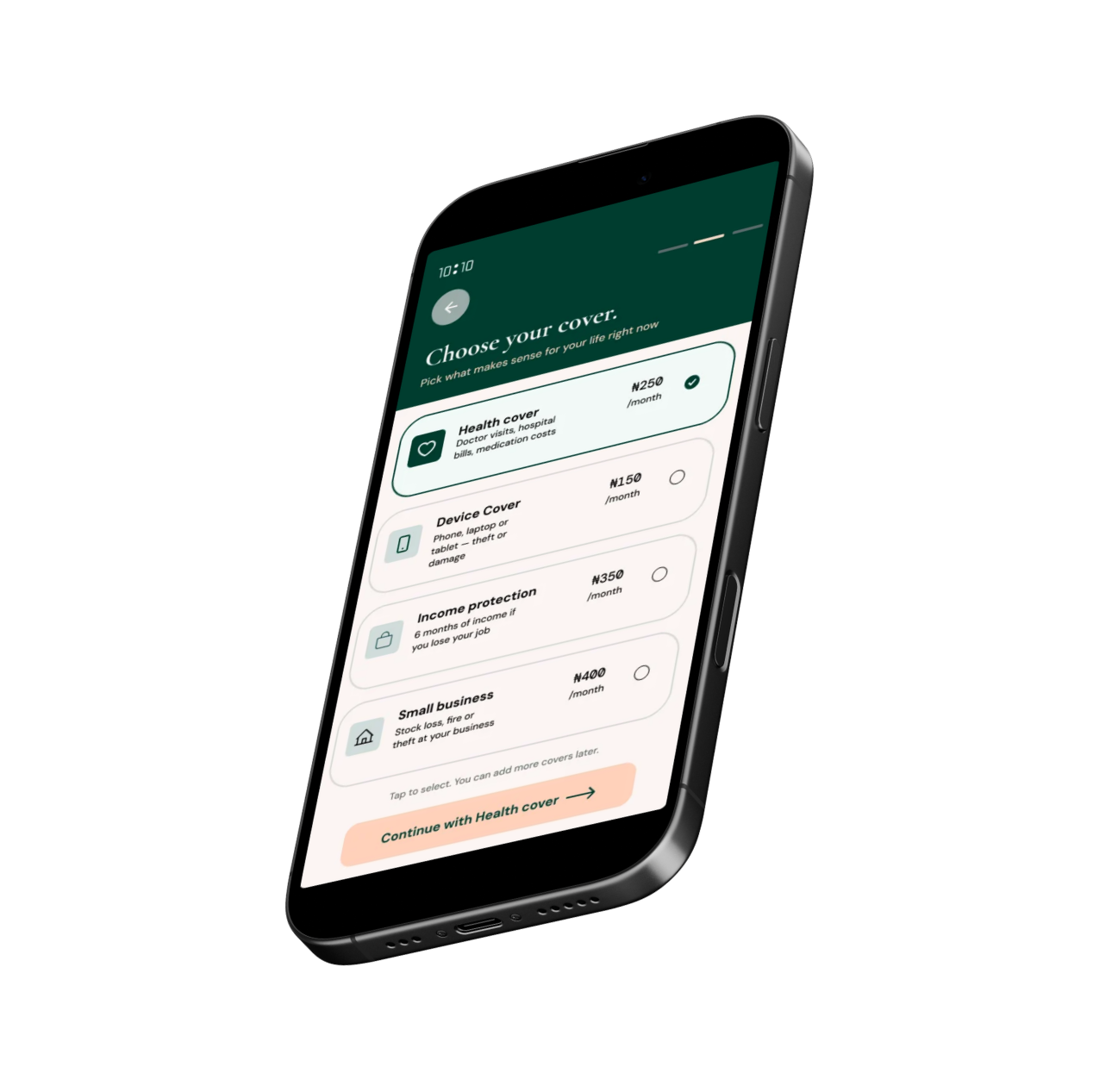
Product: one brand, three functions — Dashboard, Àjo Covers, Àjo Claims. No jargon, no forms that assume formal employment, insurance that shows you where you stand in plain terms.
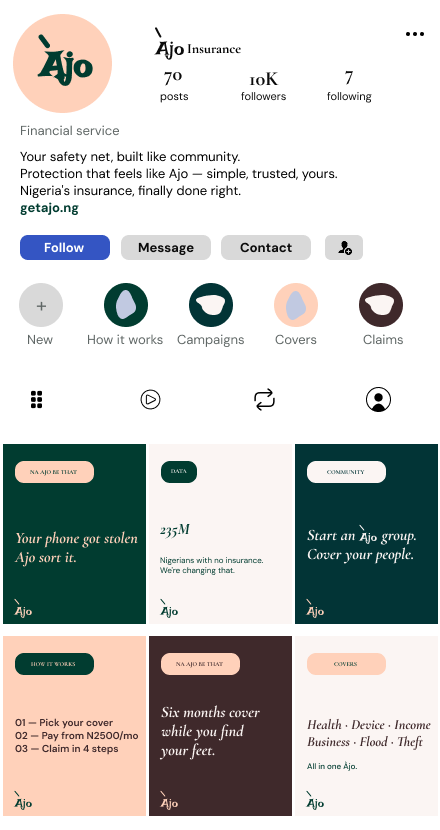
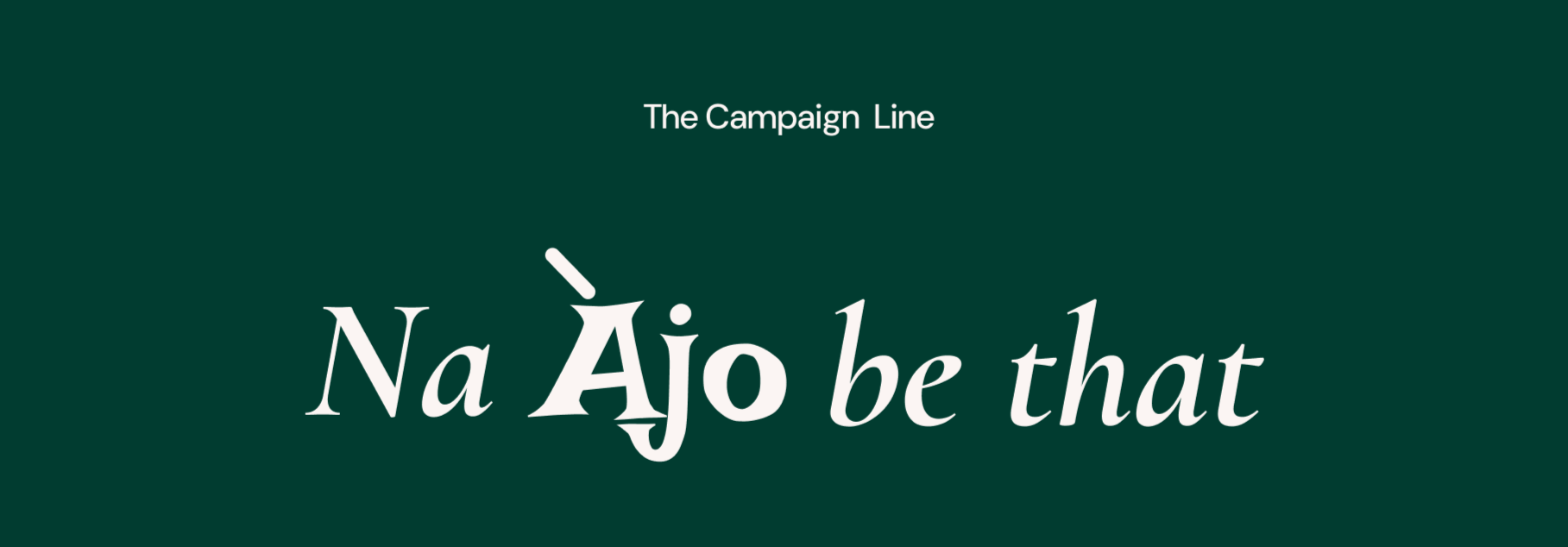
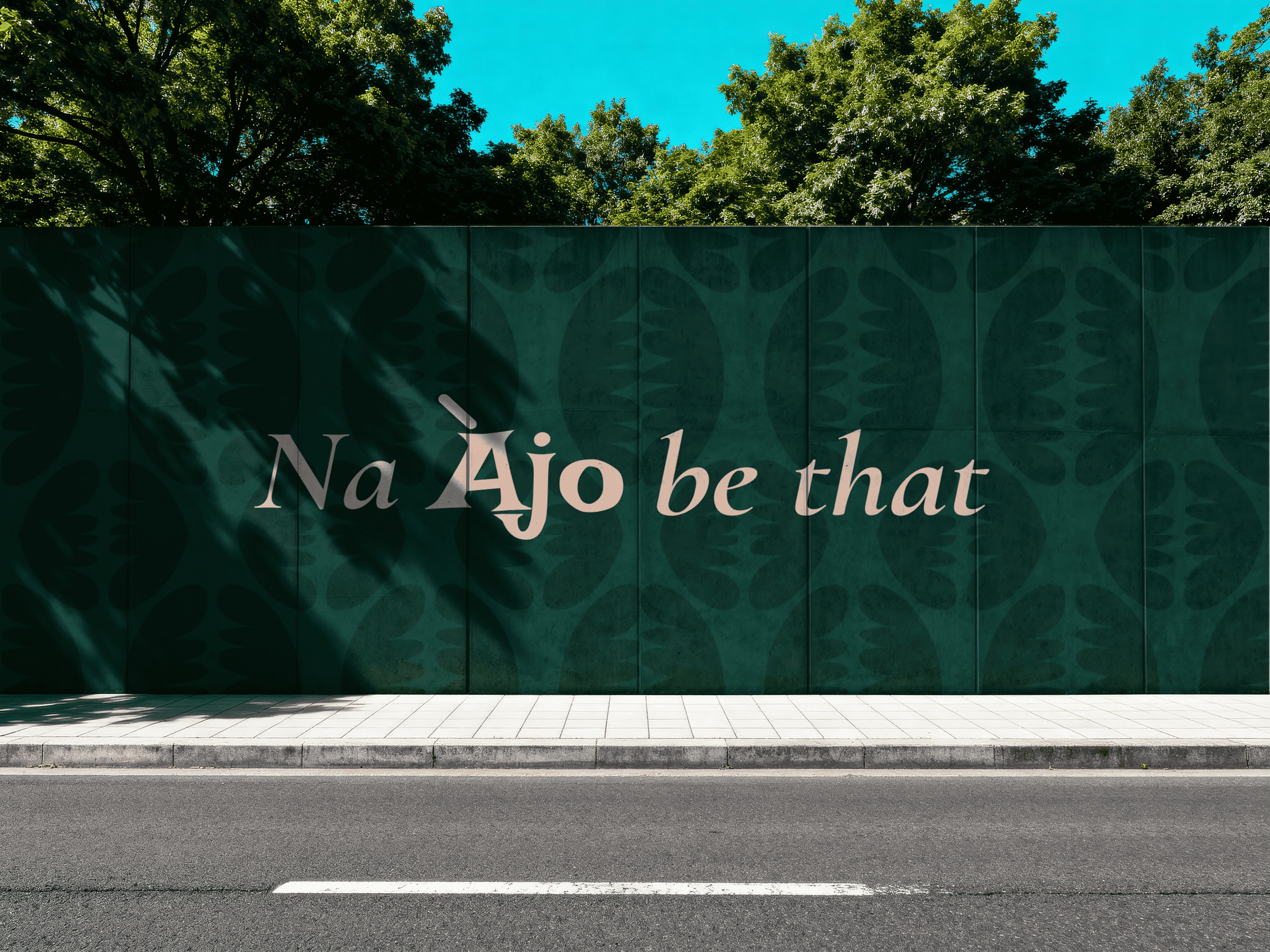
"Na Àjo Be "That"—written in Pidgin English, from a position of assumed familiarity, because research showed community distribution means the first who hears about Àjo tells ten others.
A brand is not what it looks like. It is what it does when it meets the person it was built for. Every decision in this project traces to something specific: a behaviour observed in research, a tension identified in synthesis, or a pattern in how Nigerians think about money, community, and risk. The name came from a finding. The palette came from a position. The campaign language came from understanding exactly who would read it and what they already believed.
That's what I mean by research-led — not research as decoration, not a section in a deck, but the source of every choice. So that when the brand reaches the 99%, it doesn't feel new. It feels like it was always going to be theirs.
"I didn't name the brand. I borrowed a word that already belonged to every Nigerian and proved it could do protection."